Are Sleep Disorders Common in Adolescence
If your teen seems tired all the time, scrolling past midnight, or sleeping through weekends like it’s recovery mode, you’re not alone.
Across the world, sleep problems have quietly become one of the most common struggles in adolescence — and they often go unnoticed.
While it’s easy to blame screens or late-night chats, the truth is more complex. Teenage sleep isn’t just about bedtime; it’s about brain chemistry, stress, identity changes, and emotional overload.
According to the American Academy of Sleep Medicine, nearly 70 % of high school students don’t get the recommended 8–10 hours of sleep per night. Many hover between 5 and 6 hours — a level that can quietly affect mood, focus, and mental health.
So, are sleep disorders common in adolescence? Absolutely — and understanding why is the first step toward healing those restless nights.
Let’s explore what’s really happening inside the teenage mind when it can’t switch off.
1. The Science of Teen Sleep — Why It’s Different
Teenagers aren’t lazy — their bodies are biologically programmed to fall asleep later and wake later.
During adolescence, the circadian rhythm — the internal clock that regulates sleep and wake times — shifts by two or more hours. This natural delay, known as sleep-phase shift, makes it nearly impossible for many teens to fall asleep before 11 p.m.
Add early school schedules and academic pressure, and you get a perfect storm: chronic sleep deprivation.
When sleep is cut short, the brain produces more stress hormones (cortisol) and less serotonin — increasing the risk of anxiety and depression.
This biological shift doesn’t mean teens are defiant — it means they’re wired for a different rhythm.
2. How Stress and Anxiety Steal Teen Sleep
Anxiety and sleep are deeply intertwined. When the mind races with “What if?” scenarios — about grades, social media, or future fears — the body stays in alert mode.
Research from the National Institutes of Health shows that adolescents with anxiety or depression are three times more likely to develop insomnia symptoms.
Common patterns include:
- Racing thoughts before bed (“Did I say something weird today?”)
- Increased screen use as distraction from stress
- Nighttime panic or overthinking that keeps the body tense
- Irregular sleep schedule due to homework or social pressure
3. Common Sleep Disorders in Adolescence
Are Sleep Disorders Common in Adolescence
Are Sleep Disorders Common in Adolescence
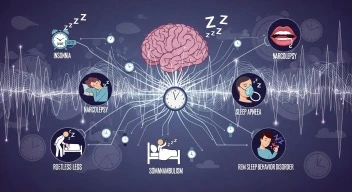
Let’s look at the most frequent types of sleep disorders that affect teens:
3.1. Insomnia
Difficulty falling asleep or staying asleep for weeks or months. Often linked to anxiety, stress, or excessive screen time.
3.2. Delayed Sleep-Phase Syndrome (DSPS)
Teens naturally feel alert at night and sleepy in the morning — a circadian rhythm shift that conflicts with school hours.
3.3. Sleep Apnea
Interrupted breathing during sleep that leads to fatigue and concentration issues. Can be caused by obstruction or weight changes.
3.4. Restless Legs Syndrome (RLS)
An uncomfortable urge to move the legs before sleep — often linked to low iron levels or genetic factors.
3.5. Night Terrors and Parasomnias
Sudden episodes of intense fear or movement during sleep, often tied to stress or trauma.
Recognizing these patterns early is key to preventing chronic sleep issues later in life.
4. The Hidden Impact of Sleep Loss on Mental Health
Sleep is the foundation of emotional regulation. Without enough rest, the brain’s prefrontal cortex — the area responsible for logic and decision making — starts to shut down.
This means teens become more reactive, irritable, and sensitive to stress.
The cycle looks like this:
Stress → Poor Sleep → Irritability → Conflict → More Stress
Over time, sleep deprivation can mimic the symptoms of anxiety and depression, blurring diagnoses and making treatment harder.
This emotional loop mirrors patterns we see in The Hidden Anxiety Behind Every Shopaholic Swipe You Need to Know — where temporary coping mechanisms mask deeper unease.
5. Technology and the “Blue Light Problem”
Phones and screens don’t just keep teens awake — they literally trick the brain into thinking it’s daytime.
Blue light from devices suppresses melatonin, the sleep hormone, shifting the sleep cycle by hours.
Moreover, scrolling before bed floods the mind with stimulation — bright images, notifications, and dopamine spikes.
A study published in Frontiers in Human Neuroscience showed that teens exposed to screens within one hour of bedtime take significantly longer to fall asleep and have lower REM quality.
Encouraging a “digital sunset” one hour before bed is one of the most effective ways to improve sleep.
6. The Role of Lifestyle Habits
Good sleep isn’t just about what happens at night — it’s also influenced by what teens do during the day.
Healthy habits that boost sleep quality:
- Daily movement: Even 20 minutes of exercise reduces restlessness.
- Balanced nutrition: Avoid heavy meals and caffeine after 2 p.m.
- Routine: Go to bed and wake up at the same time every day.
- Natural light exposure: Morning sunlight resets circadian rhythms.
As explored in Healing Through Creativity: How Does Art Free the Mind, creative activities like drawing or journaling before bed can gently unwind the mind without screens.
7. Parent Perspective — How to Support a Teen With Sleep Issues
Are Sleep Disorders Common in Adolescence

Are Sleep Disorders Common in Adolescence
Parents often feel helpless when their teen won’t sleep — but small, consistent changes help.
1. Listen Before Lecturing
Ask about what’s keeping them up — without judgment.
Sometimes the issue is emotional rather than behavioral.
2. Create a Calm Evening Routine
Dim lights, lower noise, and encourage quiet activities like reading or soft music.
3. Collaborate, Don’t Command
Work together to set bedtime goals and screen limits instead of enforcing rules that feel punitive.
4. Model Good Sleep Habits
Teens mirror parents’ behaviors. If they see you prioritize rest, they learn that it’s a form of self-care, not weakness.
Are Sleep Disorders Common in Adolescence
8. When to Seek Professional Help
If sleep issues persist for months or interfere with school, mood, or daily functioning, it’s time to consult a doctor or therapist.
Look for signs such as:
- Extreme fatigue despite long hours in bed
- Loud snoring or breathing pauses
- Frequent nightmares or panic before sleep
- Mood swings linked to sleep loss
A sleep specialist can conduct a polysomnography test to detect underlying issues. Therapists may also use Cognitive Behavioral Therapy for Insomnia (CBT-I), which is proven effective in retraining sleep habits.
External support isn’t a sign of failure — it’s an act of care and awareness.
9. The Connection Between Sleep and Self-Esteem
When teens don’t sleep, their self-worth often takes a hit. Exhaustion can lead to poor academic performance and social withdrawal, which then feeds self-criticism.
That’s why emotional support matters as much as bedtime routines.
Encourage gentle affirmations like:
“I deserve rest.”
“My worth isn’t measured by productivity.”
You can find more examples in 20 Affirmation Art Images That Will Encourage Daily Positivity — ideal for teens learning self-kindness.
10. Building a Culture of Rest
The real solution goes beyond bedrooms — it’s cultural.
Schools starting later, parents normalizing rest, and teens seeing sleep as strength can transform mental health nationwide.
Sleep isn’t a luxury; it’s mental medicine.
Encouraging healthy sleep habits isn’t about discipline — it’s about teaching teens that peace and productivity can coexist.
Are Sleep Disorders Common in Adolescence
Bringing It All Together — Rest Is Rebellion in a Restless World
For today’s teens, choosing sleep isn’t laziness — it’s an act of self-preservation.
When they learn to rest without guilt, they reclaim something precious: clarity, focus, and hope.
So if your teen struggles to sleep, remember — this isn’t just a habit problem; it’s a healing journey.
With compassion, routine, and a little science, every restless mind can learn to rest again.
Because rest is not a reward — it’s a right.