
Why Someone with Mental Illness Might Paint the Joker on Their Face
I’ll never forget the day I saw someone I love paint the Joker’s grin across their face. The bright red curve, the dark circles, the silence that followed — it didn’t look theatrical; it looked like pain trying to breathe. In that moment I realized how misunderstood emotional suffering can be.
Many people associate the Joker with chaos or violence. But what I witnessed wasn’t a threat to others; it was a desperate, wordless confession of inner chaos. This experience changed how I see symbolic acts in mental illness — especially in conditions such as Borderline Personality Disorder (BPD) and Bipolar Disorder.
Why the Joker Symbol Appeals to Someone in Distress
A Mask for Pain
The Joker’s painted smile hides despair behind laughter. For someone fighting BPD or Bipolar swings, the face can feel like armor: “If I look unbreakable, maybe I’ll stop breaking.” The act of painting the face becomes a physical metaphor — a visible version of the invisible.
Chaos and Control
In psychology, outward transformation can be an attempt to regain control during internal chaos. Colors, makeup, or costume offer a small pocket of certainty when emotions refuse to stay steady.
A Rebellion Against Stigma
The Joker figure also represents defiance. For someone who feels judged, shamed, or unseen, adopting that mask can be a way to say, “You already think I’m broken — so here’s your villain.” It’s not about crime; it’s about reclaiming identity.
When BPD and Bipolar Collide with Identity
BPD — The Fragile Sense of Self
People living with Borderline Personality Disorder often describe feeling like “an emotional skinless person.” Identity can shift hour by hour. The Joker persona can temporarily give shape to confusion — a defined character to step into when one’s own feels lost.
Bipolar Disorder — Intensity and Impulsivity
During manic or hypomanic phases, creativity and symbolism surge. Ideas feel electric, urgent, theatrical. In depressive phases, the same person may use the same act as protest or grief ritual. Either way, the behavior is rarely random; it’s emotional shorthand for “I’m not okay.”
The Meaning Behind Silence and Tears
When I approached my loved one, she wouldn’t talk. She cried quietly, wiped the paint from her cheeks, and turned away. That silence spoke louder than words.
Crying after such an act isn’t manipulation — it’s collapse. Emotional intensity has tipped into exhaustion. The refusal to talk is often self-protection, not hostility. In BPD, shame can be unbearable; in Bipolar depression, speech itself can feel impossible.
Art as a Cry for Understanding
Why Someone with Mental Illness Might Paint the Joker on Their Face
Why Someone with Mental Illness Might Paint the Joker on Their Face
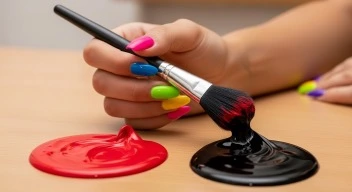
Painting, drawing, writing, or makeup artistry can become a safe language when spoken language fails. Mental-health clinicians often note that self-expression through art helps people externalize overwhelming emotions.
That doesn’t mean every symbolic act is healthy — some carry risk — but it does mean we should respond with curiosity, not fear. Ask gently:
“What does this image mean to you today?”
and accept “I don’t know” as a valid answer.
For creative-therapy perspectives, see NAMI.org’s article on Art and Mental Health
How Loved Ones Can Respond
Stay Calm and Present
Shock or judgment shuts the door. Quiet presence reopens it. Sit nearby, speak softly, and let the moment breathe.
Avoid Interrogation
“Why did you do that?” often feels like accusation. Replace it with empathy:
“You must have been feeling something really strong. I’m here.”
Offer Grounding Instead of Control
Suggest small, concrete comforts — water, a blanket, gentle music. These help regulate the nervous system faster than arguments do.
Know When to Reach for Help
If there’s mention of hopelessness, self-harm, or loss of reality, reach out for professional or emergency support immediately. You can call or text 988 (Suicide and Crisis Lifeline) in the U.S. Compassion includes safety.
What This Experience Taught Me
That day changed the way I interpret “unusual” behavior. I learned that acts like painting the Joker face aren’t about shock value — they’re about visibility. They say, “See me, even if I can’t explain myself.”
When I stopped reacting with fear and started listening with compassion, I saw the truth: this wasn’t rebellion; it was exhaustion. The smile wasn’t laughter — it was survival.
Understanding Doesn’t Mean Excusing
Recognizing emotional symbolism doesn’t mean ignoring risk. If someone’s expressions become dangerous — mixing delusion, violence, or self-harm — they need urgent clinical care.
Empathy must walk hand-in-hand with boundaries.
Still, most of the time these gestures are communication, not criminal intent. They are requests for connection.
Turning Symbolism Into Healing
Encouraging safe creative outlets can transform crisis into communication:
- Art therapy or journaling helps convert chaos into meaning.
- Music and movement regulate mood swings.
- Peer-support groups allow people to be seen without judgment.
- Therapy gives language to what symbols once carried alone.
In many ways, this is the real work of recovery — teaching the heart to speak without needing a mask.
A Message to Families and Friends
Why Someone with Mental Illness Might Paint the Joker on Their Face

Why Someone with Mental Illness Might Paint the Joker on Their Face
If you’ve ever seen someone you love act in a way that frightened or confused you, remember: mental illness doesn’t erase humanity. Behind every alarming gesture is a person longing to feel safe, understood, and loved.
Your calm presence, your patience, and your refusal to label them as “crazy” can do more healing than a hundred lectures.
Sometimes the best therapy begins with silence and a cup of tea shared without judgment.
The bottom line — The Mask and the Mirror
The Joker’s painted face will always stay with me. But now, when I think of it, I don’t see a villain.
I see a mirror — one that reflects the ache of everyone who has ever felt unseen.
If that moment taught me anything, it’s that empathy is more powerful than fear, and understanding is the first step toward change.
Find stories of healing, hope, and growth at AllMentalIllness.com — your space for better mental health.