Negative words in songs
We all know music can lift us up — but sometimes it can pull us down too.
Certain songs leave you feeling drained, anxious, or strangely heavy, even if you weren’t upset before you pressed play.
Why does this happen?
Because words matter — especially when they’re repeated on rhythm.
Music enters the nervous system faster than spoken language. Add lyrics about heartbreak, worthlessness, anger, betrayal, or emotional chaos, and your brain starts absorbing those messages as emotional truth.
This doesn’t mean you should avoid sad songs or intense artists. Emotional expression is healthy.
But knowing how negative words in songs affect your mind gives you the power to choose what nourishes your mental well-being — and what you might want to limit when you’re already fragile.
In this post, we’ll explore the science behind negative lyrics, how they shape self-worth, anxiety, mood, and identity, and how to protect your emotional balance without losing your love for music.
1. Why Lyrics Affect the Brain So Deeply
When you listen to music, especially with headphones, your brain enters a heightened sensory-emotional state.
Neuroscientists call this emotional entrainment — your thoughts, heart rate, and nervous system begin syncing with the rhythm and tone of the song.
But lyrics add another layer:
Negative words activate the brain’s threat centers.
Words like alone, broken, worthless, nothing, hate, failure, rejected, or lost trigger microscopic stress responses — even when you’re not consciously focusing on them.
Melody + negative language increases emotional imprinting.
Your brain remembers lyrics better than conversations, because rhythm multiplies memorization.
This is the same mechanism that makes positive lyrics so powerful — which you explored in your post Positive Words in Songs and Your Mental Health.
But negative words carry weight too — just in a different direction.
Pair this with our post: Positive Words in Songs and Your Mental Health (Love, Worth, Peace & More) for a balanced look at lyrical influence.
2. When Negative Lyrics Become Emotional Triggers
Not every sad song triggers someone. But for people with anxiety, depression, trauma, or emotional sensitivity, certain phrases can reopen wounds.
For example:
- Breakup songs can trigger abandonment wounds.
- Songs with self-blame language can feed negative self-talk.
- Angry or aggressive lyrics can increase irritability or restlessness.
- Songs about hopelessness can reinforce depressive thoughts.
This effect becomes stronger when:
- you’re already stressed
- your self-esteem is low
- you’re feeling alone
- you’re going through a breakup
- you’re exhausted
- you’re scrolling late at night
- you’re emotionally raw
It’s not the music that’s the problem — it’s the internal state we bring to the music.
A study from Psychology Today found that people in low moods tend to select music that mirrors their sadness, but this can sometimes trap them in emotional rumination rather than help them process it.
3. How Repetitive Negative Words Shape Self-Worth
Negative lyrics about:
- feeling unlovable
- self-hatred
- shame
- rejection
- “not enough”
- hopelessness
- failure
…can reinforce the inner critic.
If you hear lyrics enough times, your brain begins absorbing them as personal truth — even if the song isn’t about you.
Especially dangerous phrases include:
- “I’m nothing”
- “Nobody loves me”
- “I hate myself”
- “I’ll never be enough”
- “I can’t do this anymore”
These lines mimic intrusive thoughts commonly found in anxiety and depression.
This is why choosing lyrics that uplift or heal is essential during vulnerable emotional periods.
If you’re looking to reframe self-worth through art and healing, include internal mentions of your poem series: 10 Rhyming Self-Love Poems to Heal Your Spirit — a perfect counterbalance to heavy lyrics.
4. Negative Lyrics & Anxiety — Why They Make the Mind Race
Negative language mixed with fast tempos or intense production stimulates your fight-or-flight response.
Your body may react with:
- faster heartbeat
- restlessness
- irritability
- tension in shoulders/jaw
- trouble concentrating
- sudden sadness
Songs with chaotic or aggressive themes can heighten anxiety because the nervous system can’t distinguish between:
“I’m in danger”
and
“This is just a song.”
Harvard Health – How Music Affects Stress and the Nervous System shows that melody and language influence stress hormones like cortisol.
5. Heartbreak Songs: Healing vs. Damage
Heartbreak songs can be therapeutic when:
- they validate how you feel
- they help release tears
- they make you feel understood
But they can become harmful if:
- you listen on repeat for hours
- the lyrics reinforce unworthiness
- they paint love as doomed
- they keep you mentally attached to the person
- they prevent emotional processing
Some heartbreak music feeds recovery.
Others feed rumination.
Signs you’re stuck in lyrical rumination:
- You replay specific lines constantly
- You feel more hopeless after listening
- You imagine arguments or scenarios
- The song becomes a mental background loop
You can gently shift your playlist toward healing by introducing songs that include words like:
- breathe
- release
- heal
- rise
- worth
- peace
- future
6. Negative Lyrics Can Reinforce Old Trauma
For people healing from:
- childhood emotional wounds
- bullying
- abusive relationships
- grief
- abandonment
- identity struggles
…certain song themes can act like emotional flashbacks.
Lyrics such as:
- “no one cares”
- “you’re nothing without me”
- “I hope you hurt”
- “I can’t escape”
…can echo past experiences.
This is why intentional listening is such an important mental health habit.
You don’t need to avoid all intense songs, but you do need awareness.
For related reading, check out : Healing Through Creativity: How Does Art Free the Mind?
This helps bridge the connection between triggers and emotional processing.
7. Identity & Music: How Negative Lyrics Shape Who You Think You Are
Music is identity-building, especially for:
- teens
- young adults
- people in transition
- emotionally sensitive individuals
- anyone with mental health challenges
Your playlists can influence:
- self-esteem
- emotional reactions
- relationship expectations
- worldview
- future decisions
Songs that constantly repeat messages of pain, betrayal, distrust, hopelessness, or self-hate can slowly sculpt:
- how you talk to yourself
- how you expect others to treat you
- how you view love
- how you approach challenges
This doesn’t mean you should avoid intense music — only that you should balance it with lyrical nourishment.
8. How to Protect Your Mental Health Without Giving Up Your Music
Here are gentle, practical steps:
1. Notice how a song makes you feel after five minutes.
If you feel heavier — it’s a signal.
2. Avoid negative phrases when you’re emotionally drained.
Nighttime is the worst time for lyrical negativity.
3. Alternate heavy songs with neutral or uplifting ones.
A simple rotation makes a big difference.
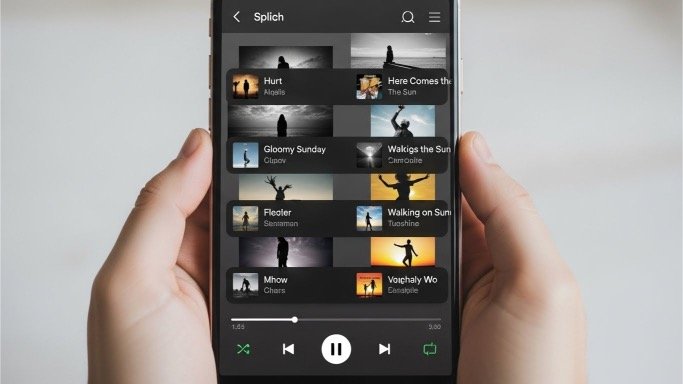
4. Create an “emotional safety playlist.”
Fill it with songs containing words like:
- love
- home
- calm
- breathe
- enough
- freedom
- steady
- gentle
- rise
5. Limit looping songs tied to trauma.
Repetition reinforces wound pathways.
6. Use music intentionally.
Choose what you need, not what your feelings automatically reach for.
7. Pair music with healing activities:
- journaling
- drawing
- walking
- stretching
- meditation
This grounds your emotions instead of letting them spiral.
9. When Negative Songs Are Actually Healthy
Yes — negative songs can help when:
- they help you process complex feelings
- they mirror your grief in a validating way
- they help release emotions through tears
- they allow catharsis instead of suppression
- they remind you you’re not alone
The key distinction is whether the song:
expresses emotion (healthy)
or
reinforces emotion (unhealthy).
If you feel lighter afterward, the song helped.
If you feel heavier, it harmed.
The bottom line — Music Is a Mirror, Not a Master
Music reflects what we feel, but it doesn’t have to control it.
Negative lyrics are not “bad” — they’re emotional expression.
But awareness makes the difference between using music to heal and using it to deepen wounds.
The next time you press play, pause for a moment and ask:
Does this song lift me or drain me?
Does it help me process or keep me stuck?
Your mental health deserves music that supports your healing — not just your hurt.
Find more emotional wellness reflections at AllMentalIllness.com — your space for understanding, creativity, and gentle recovery.
Our Authority Sources
- https://www.frontiersin.org/articles/10.3389/fpsyg.2023.1132143/full
- https://www.apa.org/monitor/2020/11/news-music-power
- https://www.frontiersin.org/articles/10.3389/fnins.2018.01030/full
- https://www.sciencedirect.com/science/article/pii/S2666354623001308
- https://pmc.ncbi.nlm.nih.gov/articles/PMC3227856/
- https://www.quirkyemploymentquestions.com/general/offensive-music-lyrics-as-title-vii-violation-quirky-question-73/